


Retiring TAPS history at Pump Station 8
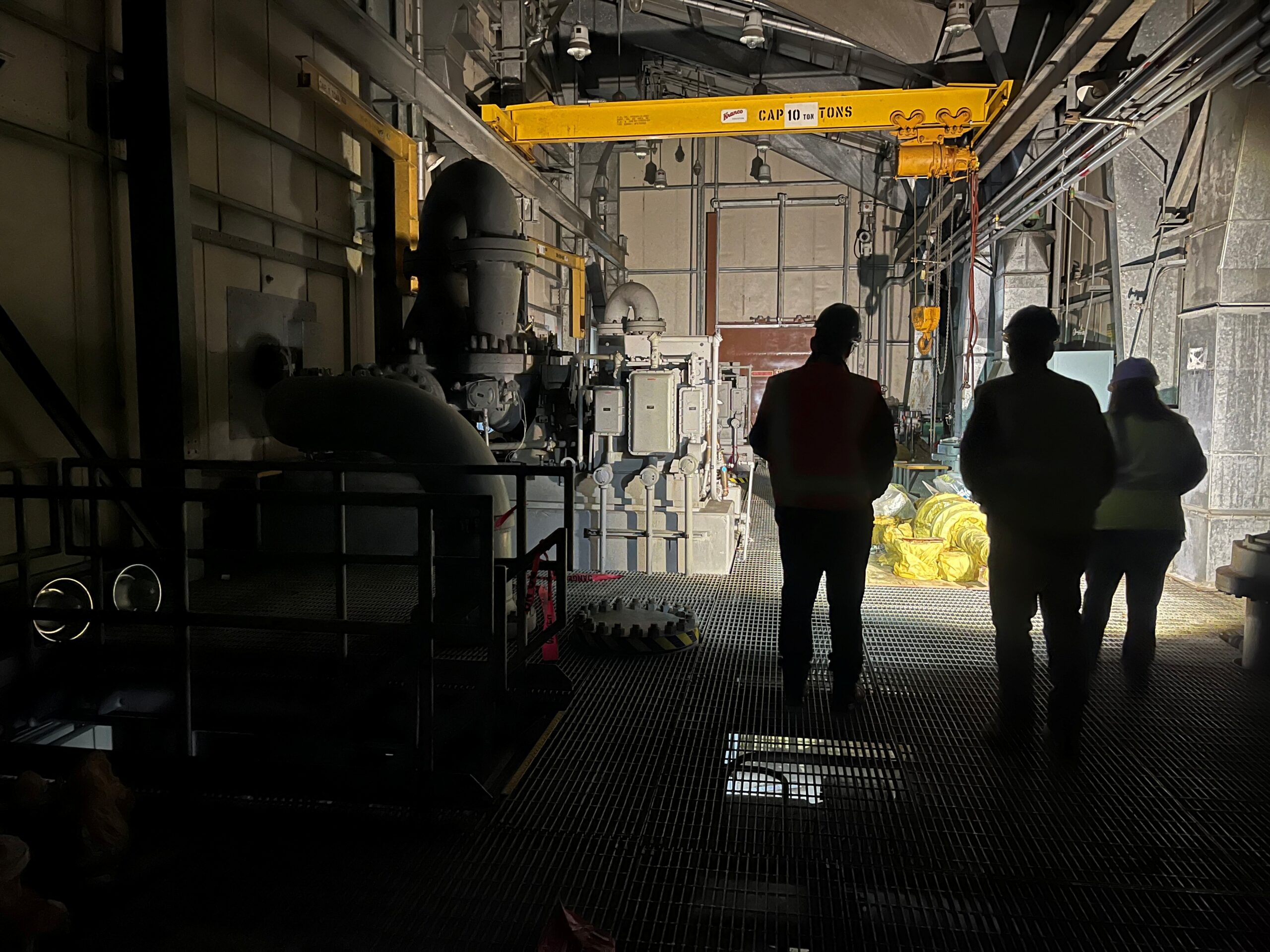
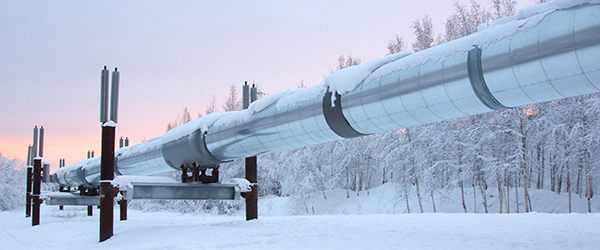
Pump Station 8 has sat still and serene for decades, a veritable TAPS time capsule, its control room, hallways, and giant pumps silent for 30 years. Now, crews are beginning work to demolish the sprawling complex, leaving behind only a few buildings and modules essential to today’s operations, and effectively erasing a visible piece of the pipeline’s past.
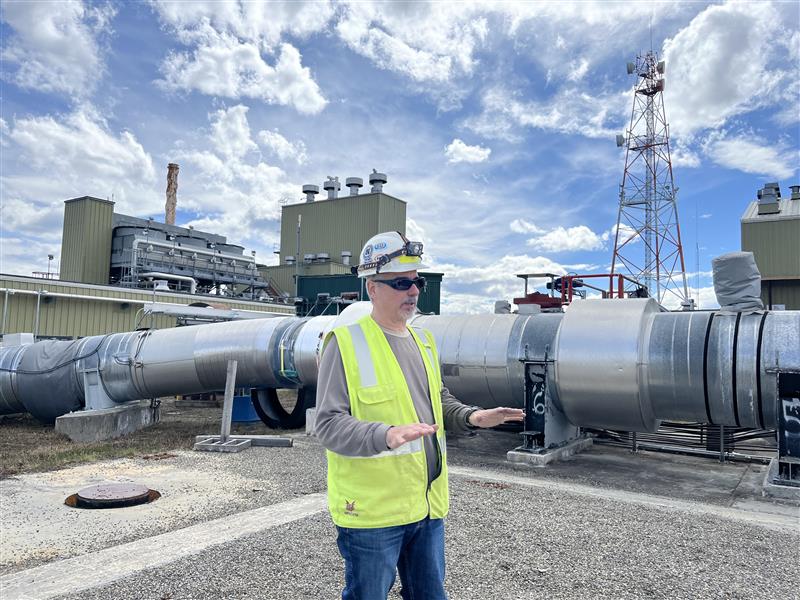
In charge of this effort is Mark Nelson, a Project Manager with Campaign Maintenance. Nelson also led other pump station demolitions and joked that when he calls, people reply, “Uh-oh, what are you tearing down now?”
It’s challenging and important work that Nelson enjoys, and it delivers on Alyeska’s commitment to remove infrastructure when it is no longer needed.
“Whenever they need something taken down, I’m the guy they call,” Mark said.
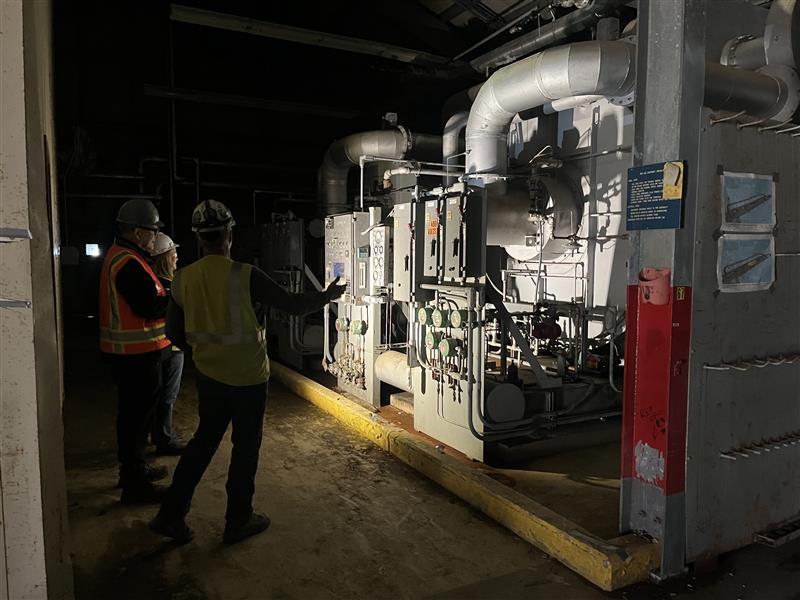
Facing a complex tear-down of a pump station – full of piping, wires, light bulbs, insulation, paint, and many other materials and substances – Nelson and his team approach the work methodically. Months of lead-in planning occurs, building in lessons learned from past demo jobs.
Set about 30 miles south of Fairbanks outside of Salcha, Pump Station 8 is part of the Trans Alaska Pipeline System’s original operating footprint.
After system startup on June 20, 1977, it received oil front at 9:24 p.m. on July 7, 1977. The very next day, it suffered one of the largest catastrophes in TAPS history, as one person died when the pump building exploded.
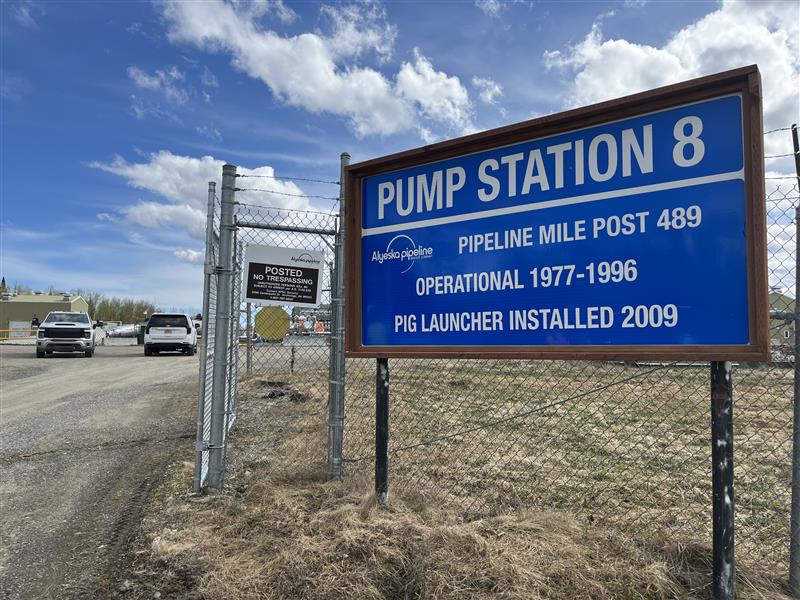
The station was rebuilt and recommissioned on March 7, 1978. When it ramped down on June 30, 1996 – becoming the first station to do so by just hours – TAPS had delivered its 11 billionth barrel of oil and loaded more than 14,000 tankers. Pump Station 10 ramped down the next day, July 1, 1996.
That wasn’t quite the end of Pump Station 8’s service to TAPS, though. A pig launcher was installed in July 2009. New crude heaters and exchangers marked startup in November 2016.
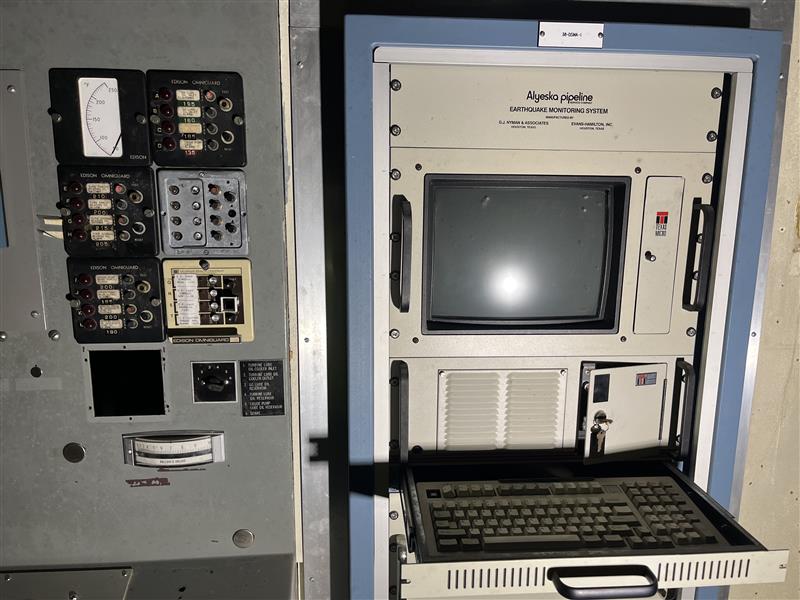
Those heaters and exchangers will remain on site. So will an earthquake monitoring module, a comms building and tower, a guard shack, and handful of small cathodic protection units.
The list of what’s going away is much longer.
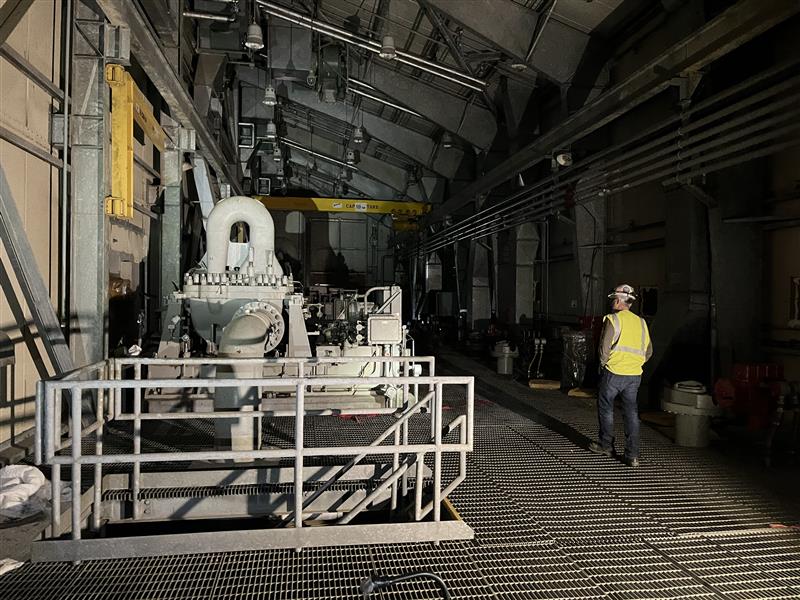
A large crude tank, two turbine fuel tanks, and a residuum tank that sit prominently atop a flat bluff above the main facility will be gone. The booster pump building, crude heater building, and propane tank supports will all be removed. Crews will take down the topping unit – basically a mini-onsite refinery used for making fuel. The office building, shop and warehouse building, control room, and the cavernous main pump building are all slated for demolition. A slew of other smaller support buildings – like sewage tanks and storage space – are also on the removal roster.
Notably there was no Personal Living Quarters building, or PLQ, at Pump Station 8; most workers commuted from North Pole, Fairbanks or other nearby areas. That simplifies the task, as PLQ removals alone take 30 days, Mark said.
In 2023, teams cleaned all belowground and aboveground piping to standard for removal. They analyzed historic photos to ensure a full understanding of the facility’s lifecycle, identifying structural changes over time that could impact demolition work. They’ve ripped open walls and flooring to test insulation and paint samples for chemicals so when the demolition team is on site, there are limited surprises.
Demo work is now underway, with initial focus on the tank farm. Mark estimated between 7-10 people will be on site for about four months.
“The key,” Mark said, “is to stay ahead of them.”
As they move through the facility, Mark and the crew look for efficiencies at every step that can be shared across future demolition work.
“Once a demo team touches a building, no one goes in,” Mark explained.
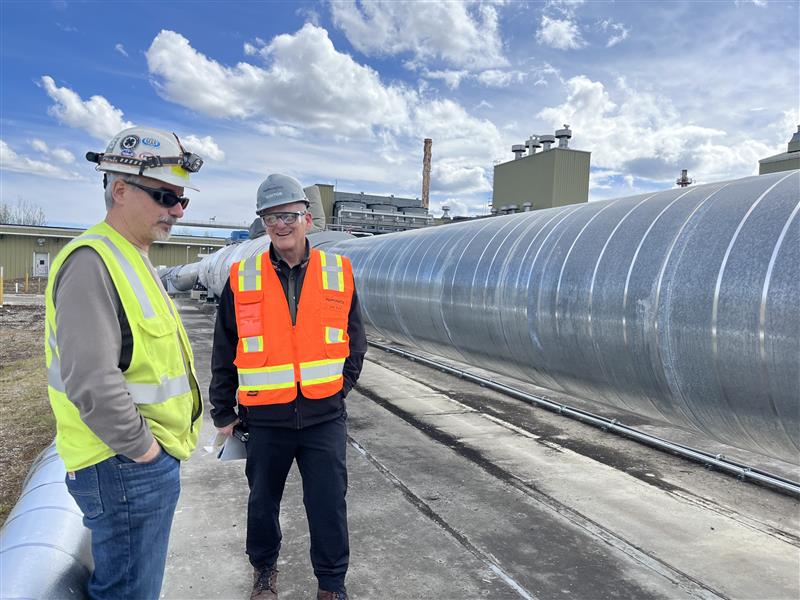
Just before demo work began, Alyeska President John Kurz joined Mark onsite to walk down the facility one last time. Inside the massive and interconnected complex that contains the main pumps, booster pumps, topping unit, and other infrastructure, it was cold enough that puddles on the ground retained icy patches. Beams of flashlights sliced through the air; Alyeska turned off power and heat years ago.
The control room was an eerie vault of knobby control panels, chunky computers, charts displaying outdated station schematics, and dozens of keys fit into manual controls, frozen in time.
Outside the control room, an old company poster on a bulletin board displayed Alyeska’s values, vision, and mission – not so different then as it is today, despite the decades that have past:
“To transport Alaska North Slope oil in a safe, environmentally-sound, timely and cost-effective manner so regulatory, owner, customer, community and employee needs are satisfied.”